A System-Wide Approach to Packaging, Toys & Waste
December 31, 2025
At McDonald’s, we’re taking steps to help reduce waste and transition to more sustainable packaging and toy materials.
Our efforts span across the whole McDonald’s System, drawing on the passion of our employees and Franchisees, the expertise of our suppliers and the care of our customers. Together, we’re uncovering clever ways to deliver real-world benefits through innovations that help reduce waste.
So, what did McDonald’s and its Franchisees do in 2025?

Recycling in China
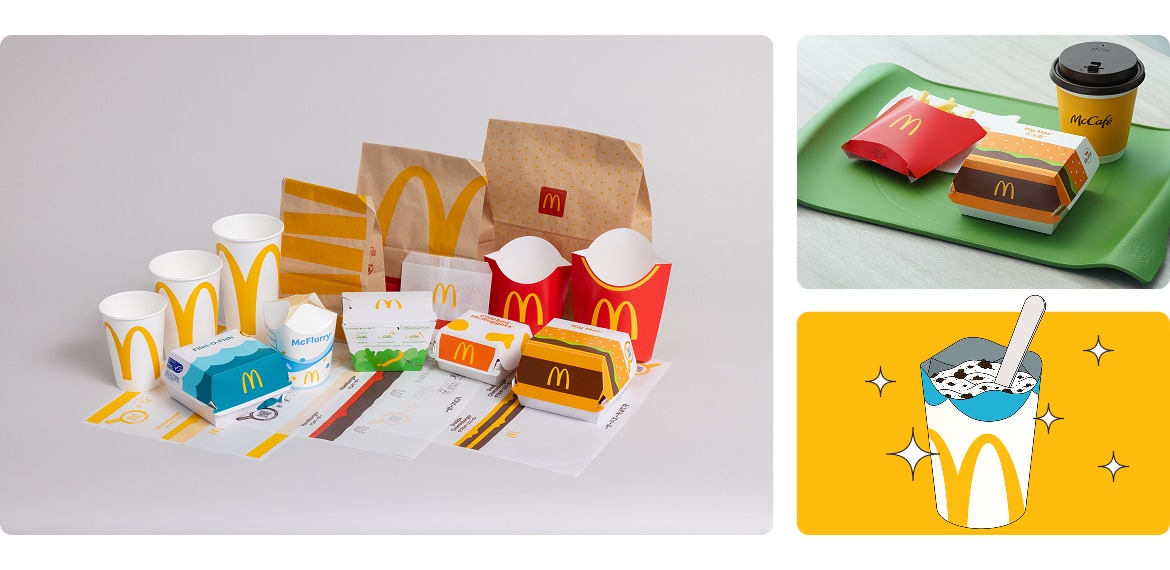
More than 470,000 trays, containing over 100 metric tons of recycled plastic in total, were in use as of the end of 2025
Engaging customers is key to helping to drive impact at scale, and that’s why McDonald’s China, an affiliate market, designed their Recycle for Good initiative, making circularity more visible and accessible.
How are they doing it?
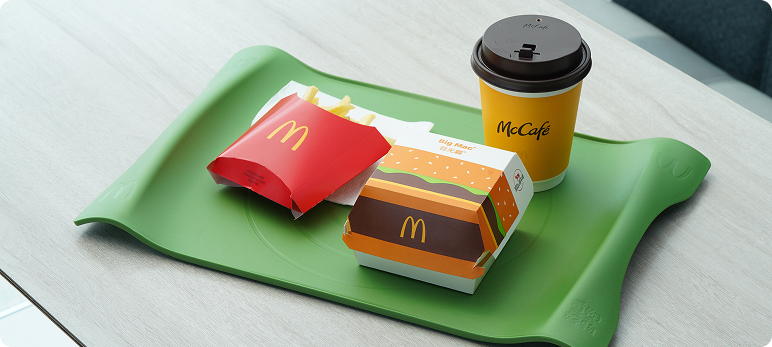
- As of the end of 2025, using more than 470,000 trays that contain 51% recycled plastic in over 6,000 restaurants – equivalent to over 100 metric tons of recycled plastic. Compared with the former tray made of ABS plastic,1 each new tray has a reduced unit carbon footprint of 0.9 kg CO2e compared to 1.9 kg CO2e.
- Installing Ronald McDonald House donation boxes in more than 7,000 restaurants that contain 55% recycled plastic.
- Launching McDonaldland plush toy sets made from over 95% recycled plastic on Earth Day 2025.
What’s more, distinct customer-facing recycling bins for guest packaging helped keep recycling front of mind when people stopped into a McDonald’s China restaurant with these bins.

Creating Space for Nature in Chile
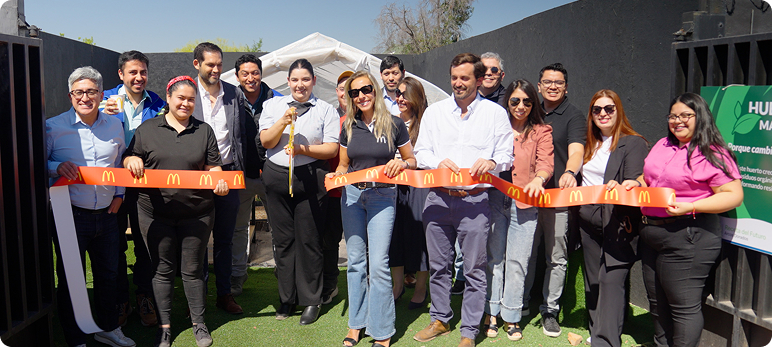
An urban garden is helping the community learn about the potential benefits of composting
To help bring more green space and sustainability learning into the heart of Santiago, Arcos Dorados, McDonald’s developmental licensee, introduced its first urban garden at the Macul Las Torres restaurant, developed in partnership with a waste management company. As well as being a green space in the middle of bustling Santiago, the use of composting in the garden helps demonstrate ways to reduce organic waste and support the growth of plants. It’s open for the public to explore, and through educational workshops, Arcos Dorados is connecting with the community on nature, food systems and sustainability topics.

Rethinking Product Transportation Packaging in Germany
~198 metric tons of shrink film expected to be avoided
To help reduce single-use plastic in product transportation, McDonald’s Germany has replaced shrink film on trolleys with reusable pallet nets in 2025. This shift is expected to reduce shrink film use by 198 metric tons.
Creating a More Circular Packaging System in Italy
100% recyclable fiber packaging expected to save 1,000 metric tons of plastic annually
In Italy, McDonald’s worked with Comieco, the National Consortium for the Recovery and Recycling of Cellulose-based Packaging, and Seda International Packaging Group to develop 100% recyclable and certified fiber packaging. The new packaging is expected to save 1,000 metric tons of plastic every year.
Customers are encouraged to dispose of their used fiber packaging at designated points, where it is collected, sorted and recycled back into paper products, helping to create a more circular system for this waste.

Plastics Reduction in Japan
6,800 metric tons of virgin plastic use expected to be avoided every year with packaging changes from 2022–2025
The market has launched strawless lids made from 100% recycled PET for cold drinks and biomass polypropylene for hot drinks nationwide. Thanks to the work they did between 2022 and 2025 to change their packaging materials, McDonald’s Japan expects to reduce their annual use of virgin plastic by approximately 6,800 metric tons.
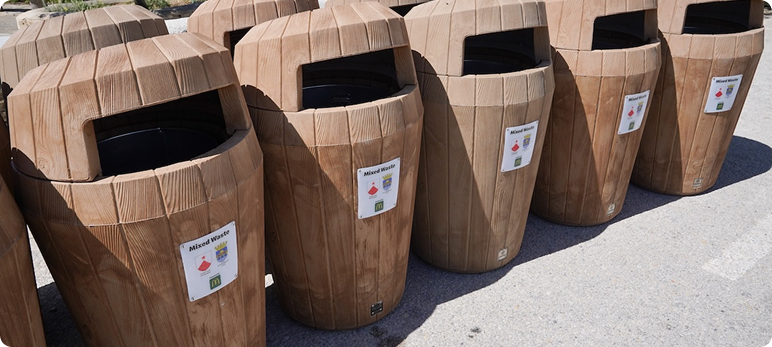
Cleaning Top of The World in Malta
20 trash bins installed to help reduce littering
In Għargħur, Malta, McDonald’s developmental licensee worked with city officials to install 20 trash bins at Top of The World – one of the city’s most popular spots. The aim is to help reduce littering in the area, promoting cleaner public spaces for residents and tourists to enjoy.
On-the-Go Recycling in The U.K.
“Recycling on the Go” bins designed to promote more responsible waste management in five U.K. councils
Neat Streets is a place-based litter and on-the-go recycling program developed by environmental service firm Hubbub and funded by McDonald’s UK. Its aim? To make it easier for people to more responsibly dispose of waste in public spaces. Five councils – West Suffolk, North Tyneside, Cardiff, Glasgow City and Aberdeen – each received £10,000 (plus match funding) and support to deliver locally tailored litter reduction and recycling projects.
In 2025, across the five locations, 88 on-the-go recycling and litter bins and 15 cigarette ballot bins were installed. At the same time, 230 existing litter bins received new signage with sorting instructions, and 523 litter pickers and equipment were distributed to community groups and businesses. As a result, recycling rates increased, with 78% fewer plastic bottles and cans ending up in general waste bins compared to before recycling bin installation. What’s more, litter around these bins decreased by more than 50% as local communities got involved in community clean-ups.
Where Waste Becomes Opportunity in Brazil
In Brazil, developmental licensee Arcos Dorados had several restaurants implementing in-restaurant composting systems as of the end of 2025, collecting more than 100 metric tons of organic waste in total. The resulting compost is used in on-site gardens, where vegetables are grown and shared with Arcos Dorados restaurant employees. These restaurants also host monthly visits from public school students to help them learn about circular food systems. In 2025 alone, nearly 20 schools and over 700 students participated.
See all the stories related to our 2025 Purpose & Impact Report

Read more about our 2025 progress in our 2025 Purpose & Impact Report